MD tviti od 6.6.2017
EU nova zgradba se intenzivno riše. Obramba+varnost ne bo več le NATO-ovska. Sposobnost za neodvisno ukrepanje=cilj https://www.wsj.com/articles/europe-must-take-its-defense-into-its-own-hands-1496688441
2/ »Soft power« ni dovolj. EU mora imeti+uporabiti »peace&security measures.« Ima 178-sistemov oborožitve, ZDA-30; 17-tipov tankov, ZDA-1…
3/ S koordinacijo nabave bi prihranili 25do100 mlrd.€. Pristojnosti bodo ostale članicam. Ne gre za EU vojsko, gre za sodelovanje z 1,32%BDP
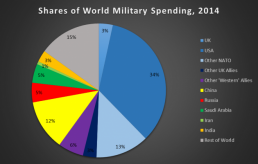
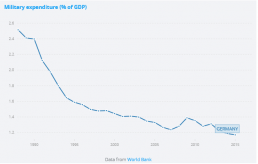
4/ Svet.izdatki za obrambo: EU-22 držav-članic NATO=13%, ZDA-34%, VB-3%, Kitajska-12%, Rusija-5%, Saudska Arabija-5% V BDP=EU 1,3%; Rusija5%
Europe Must Take Its Defense Into Its Own Hands
J. C. Juncker, B. Sobotka; June 5, 2017 (Excerpt by MD)
https://www.wsj.com/articles/europe-must-take-its-defense-into-its-own-hands-1496688441
For too long we’ve relied on the might of others. We need a new plan to boost cooperation and spending.
Europe, so often the scene of war and violence, has become a bastion of peace and stability in an unstable world. We enjoy more opportunities and freedoms here than any generation that went before us. We cannot and must not take any of that for granted.
More than 60 million people today are displaced because of war. Tensions continue to rise on our eastern border. Terrorists try to wreak havoc as power struggles rage in parts of the Mediterranean and sub-Saharan Africa. Climate change, resource scarcity and population growth will exacerbate that turbulence in the years to come.
It’s time for Europe to take its defense and security into its own hands. Nobody else will do this for us. Our partnership with NATO remains essential to our future. Twenty-two EU member states are also members of NATO. The EU must not only complement NATO but also react independently and appropriately to external threats. To that end, we are now implementing the EU Global Strategy, which sets out our vision for common action to address challenges both within and beyond our borders.
For too long, Europe has been guilty of relying on the military might of others. That isn’t sustainable. The scale and complexity of Europe’s security challenges is such that no one country can successfully address them on its own. The EU excluding Britain spent only 1.32% of its overall budget in 2016 on defense. For every €10 spent on defense research and technology, €9 are spent nationally without any coordination.
There are 178 different weapon systems in the EU, compared to 30 in the U.S. We have 17 different types of main battle tanks, while the U.S. has only one. Not only does this limit our capacity to act together, but it’s also costly for taxpayers. By joining forces and organizing procurement together, we could save between €25 billion and €100 billion.
Addressing these issues is central to the European Commission’s proposals for a European Defense Fund. The EU budget cannot replace member states on defense. The idea is to support EU countries in working together, with the aim to develop and acquire important defense equipment and ensure value for money. Cooperation must be the rule, not the exception.
Member states will decide the priorities, whether it be drones, cybersecurity, air-to-air refuelling capacity or satellite communication. The European Commission and the European Defense Agency are there to provide added value by bringing all European efforts together in a more coordinated, systematic and efficient way.