MD tviti od 2.6.2017
Kitajska prihodn.=velik? Sama želi še 35let hitre rasti. Zgod.pravi, da so na dolgi rok vsi aktualni trendi napačni http://knowledge.wharton.upenn.edu/article/us-losing-ground-to-china/?utm_source=kw_newsletter&utm_medium=email&utm_campaign=2017-05-30
 2/ Po ww2 je s pomočjo ZDA Evropa beležila hitro rast, potem Japonska+4 in nato Kitajska. Trendi so že J, kot zdaj K kazali prehitevanje ZDA
3/ Kitajska=in bo ostala ob ZDA,EU+J svet. gospodarska velesila čeprav po BDP/preb.zaostaja. Tudi globalizacije se ne da ustaviti; zato OBOR
4/ Projekt=za naslednja 10-letja. Vizija lahko nikoli ne bo uresničena. Tudi delni rezultati so lahko pozitivni. Sodelujmo kot članica EU.
Where Will China’s ‘One Belt, One Road’ Initiative Lead?
Knowledge Wharton, Mar 22, 2017 (Excerpt by MD)
http://knowledge.wharton.upenn.edu/article/can-chinas-one-belt-one-road-initiative-match-the-hype/?utm_source=kw_newsletter&utm_medium=email&utm_campaign=2017-03-23
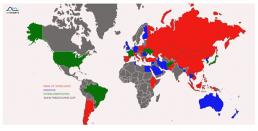
Chinese President Xi Jinping launched the OBOR initiative in 2013, two years after then-U.S. President Barack Obama initiated the Trans-Pacific Partnership (TPP) trading bloc across the Pacific region. As advertised by Beijing, the “One Belt, One Road” (OBOR) initiative, China’s grand scheme for knitting a network of roads, ports, railways and other links from East China through Southeast and South and Central Asia all the way to Europe exceeds both in scope and ambition the Marshall Plan used to rebuild Europe after World War II.
“I am concerned that its significance is underrated in the U.S. and in the West in general.” –Pieter Bottelier
“One Belt, One Road is relevant for Europe since China wants to link its rail to Europe. So, China wants Europe to be part of [OBOR], but not as a key driver.” –Rajiv Biswas
“It is quite likely that China will succeed in this initiative, though it may take a half-century.” –Franklin Allen
The U.S. Needs a Proactive Asia Play — or Risks Losing Ground to China
Geoffrey Garrett, Wharton School, May 30, 2017 (Excerpt by MD)
http://knowledge.wharton.upenn.edu/article/us-losing-ground-to-china/?utm_source=kw_newsletter&utm_medium=email&utm_campaign=2017-05-30
I do not think the U.S. is in danger of “losing” Asia-there are too many democracies and too many U.S. allies for that. I do not think that China is a rival to the U.S. as the world’s most powerful country.
I do believe the U.S. is losing ground to China in Asia, and probably beyond Asia as well. Not because China is acquiring allies. But because it is using economic diplomacy to make more friends — or at least transactional acquaintances.
This matters because Asia’s already-high importance to the global economy and to geopolitics will only grow over the next few decades. If the U.S. wants to be as influential a global player in the 21st century as it was in the 20th century, it will have to get Asia right—and the recent signs are not good.
The fact that there was scant attention to “One Belt, One Road” in the U.S. while it dominated headlines throughout Asia underscores my core worry about the U.S.’s Asia policy. Trump has been smart to back off the confrontational tone towards China maintained on the campaign trail. But nothing positive has filled the vacuum.
Here’s how China’s new economic diplomacy is supposed to work:
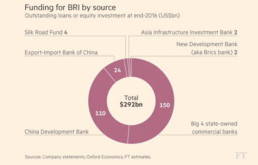
Step One: Lend emerging markets lots of money to build infrastructure.
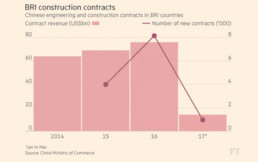
Step Two: Ease the path for recipients of BRI funding to use Chinese firms to do the infrastructure construction.