MD tviti od 18.5.2017
Euro-območje BDP-rast v zadnjem 10-letju=poleg Rusije+Brazilije najnižja v svetu. Problem=demografija+produktivnost https://www.project-syndicate.org/commentary/eurozone-growth-reform-macron-by-jim-o-neill-2017-05
2/ Grčija, Italija+Portugalska beležijo negativno rast. V vseh pogledih so potrebne »zdravljenja«, tudi zaradi ciklične narave gospodarstva.
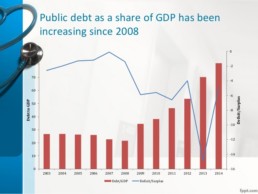
3/ Slovenija se EU približuje s hitro rastjo dolga v %BDP, s čimer si je »kupila« 1,1% rast v obdobju 2005-15. Po monetarni normalizaciji…!?
Project Syndicate Jim O’Neill May 16, 2017 (Excerpt by MD)
For starters, contrary to popular belief, world growth hasn’t been especially disappointing so far this decade. From 2010 to 2016, global output rose at an average annual rate of 3.4%, according to the International Monetary Fund.
A breakdown of particular countries’ performance offers further insights. Despite significant political trauma, the United States and the United Kingdom have performed as expected. China, India, and Japan have also grown close to their potential.
Three economies have, however, genuinely disappointed: Brazil, Russia, and the eurozone. Could that mean that many observers, including me, overestimated these economies’ potential? Or does it reflect extenuating circumstances?
Nonetheless, the eurozone’s long-term structural outlook remains uninspiring. The prospects for the two key drivers of long-term growth – the size and growth of the working-age population and productivity – look grim for the eurozone’s largest countries, even Germany, the one economy that most acknowledge is, from a cyclical perspective, doing just fine.
Of course, tapping the potential of refugees requires assimilating them to European societies and economies – a challenge that has many Europeans justifiably worried. But, if that need were met, it would certainly mitigate Europe’s mounting demographic challenge, especially in Germany and Italy.
The eurozone-wide fiscal deficit is now less than 3% of GDP, much better than the US or the UK. Macron could do something about reducing France’s structural government spending, while pursuing tax cuts and improved labor-market flexibility. Labor-market reform, in particular, could be crucial…also to convince German Chancellor Angela Merkel, to move toward greater fiscal integration, including the creation of a eurozone finance minister, which Macron advocates.